SWIM LESSONS: Frequently Asked Questions
WHY SHOULD I CHOOSE FAST TRACK SWIMMING?
We start as young as 6 months and go all the way up to 99 years! We are a local, non-chain company who cares about your child’s progress. At some places the child cannot learn floating until they have mastered holding their breath. Kids are not cookie cutter and neither our the lessons we provide. Our instructors have the ability to match your child with their personal way of learning and adapt to your needs so they become confident in this life saving skill that you are helping to provide for them.
WATER SAFETY & STARFISH FREQUENTLY ASKED QUESTIONS
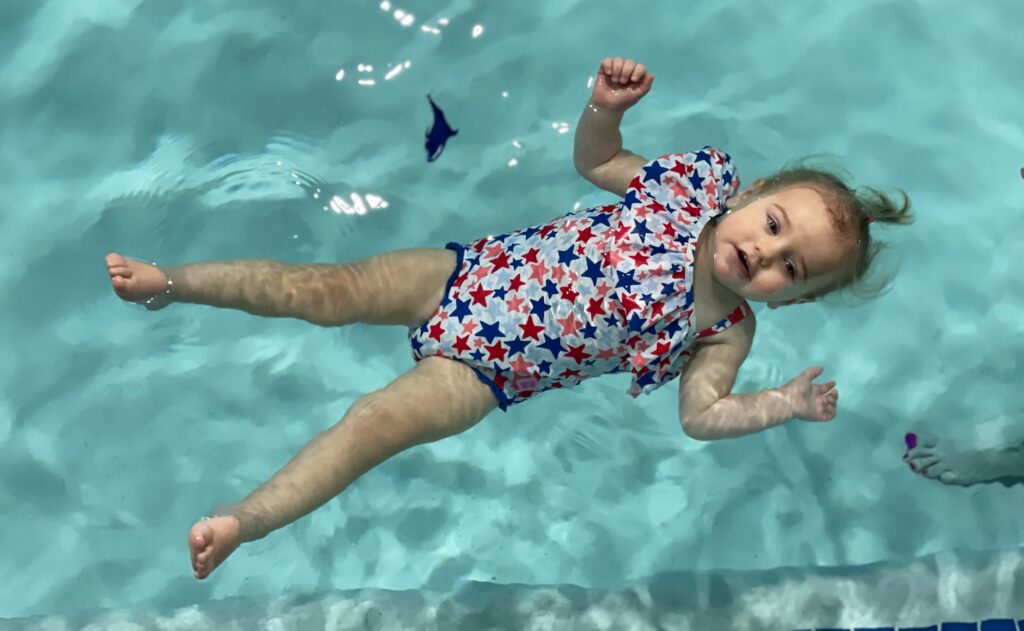
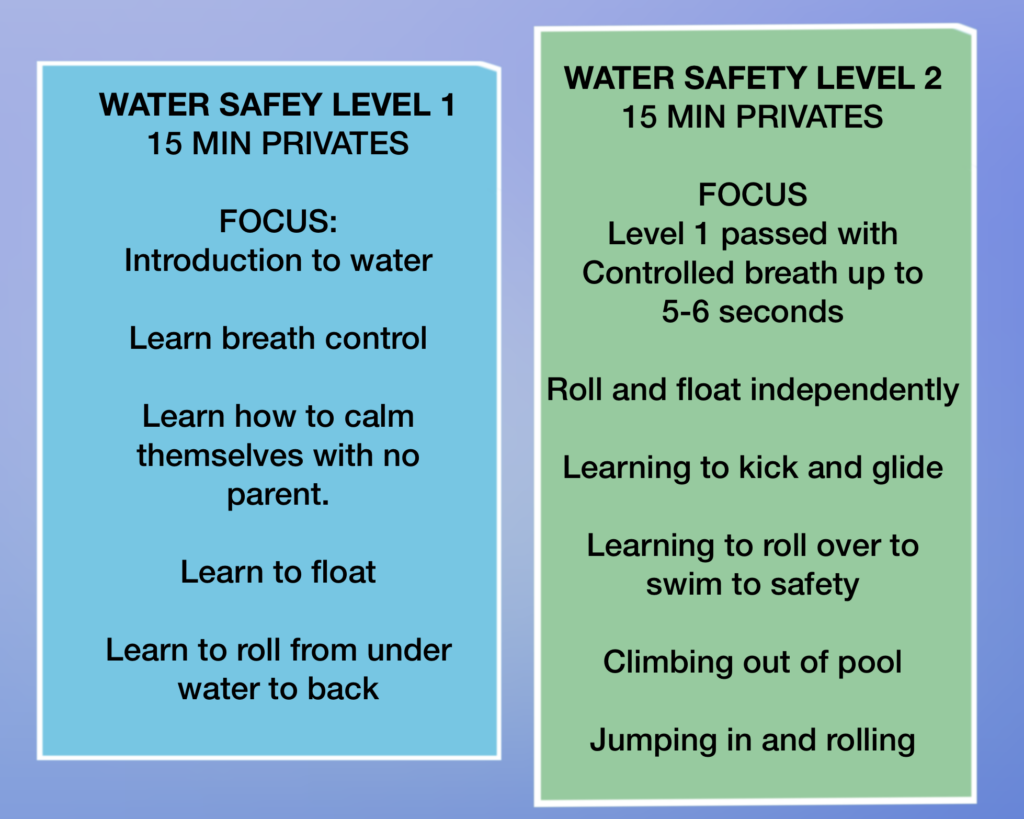
WATER SAFETY CLASS/SEAHORSE: This class focuses on what to do when falling into the water for children 6 months to 2 years. Roll to float, float for a longer time waiting for someone to come and get them and/or finding the edge of the pool to climb out. If the child is coordinated enough the teacher will incorporate elementary backstroke and front crawl arms.
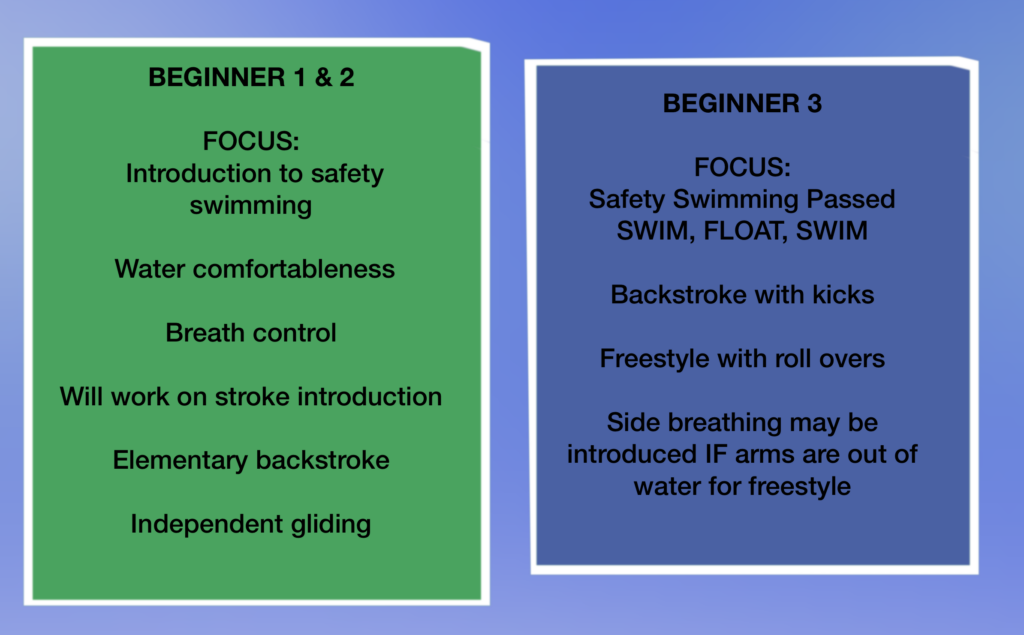
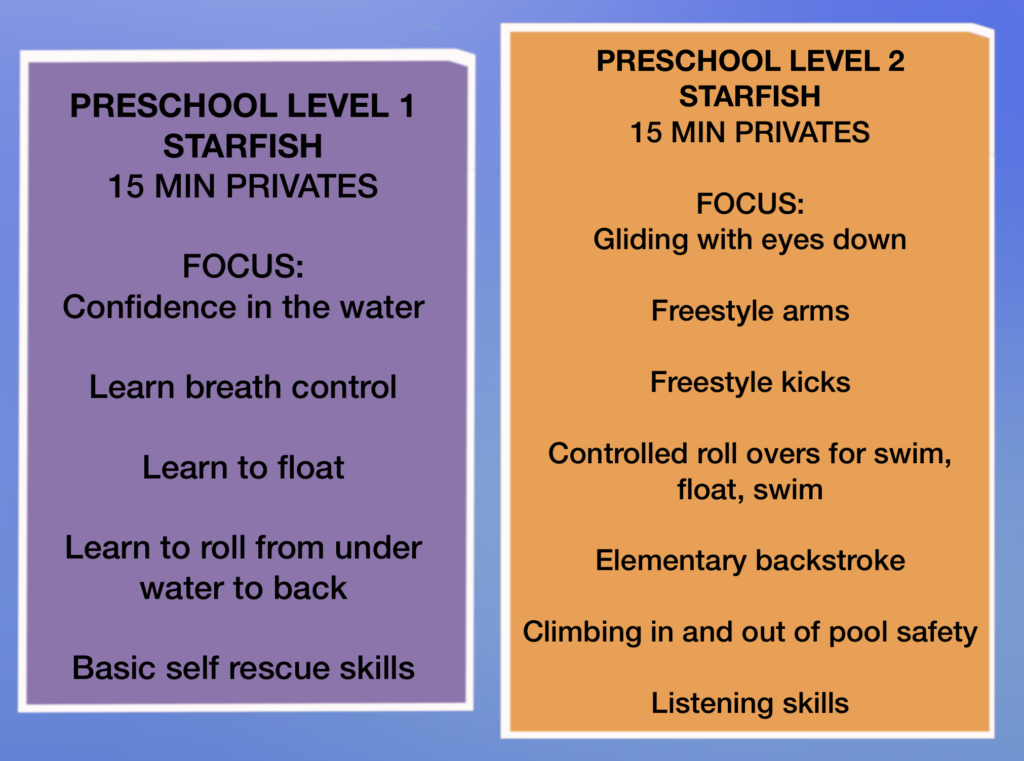
STARFISH: 3 to 4 year olds are considered starfish, because it is designed to help children learn safety in the pool much like the seahorse class, but geared towards our older friends. They learn to swim, float, swim. Strokes are incorporated with elementary backstroke and front crawl arms that will turn into freestyle arms when the child is coordinated. When the child can save themselves, but NOT ready for the 30 minute length of a class, we consider them a STARFISH 2/PRESCHOOL 2 level. They may move up to the big pool to get acclimated to getting partner. 30 minutes is not always the answer for each child. Take the quiz here.
WHAT MAKES YOU DIFFERENT THAN ISR?
- Other water survival type classes for infants and toddlers have a different approach than we do. We want your child to learn to love the water but also know the dangers it can bring. With anxious children we build up to submersion in the water, floating skills and rolling over with repetitiveness. The instructor may use toys, try to calm the child down, and gain the trust of the student. Yes they will start doing the repetitive motions, but they may wait to put the child under the water after the first lesson. The instructor is trained in the ability to read your child and not every child learns the same may have different needs. Once a child masters breath control, we work more with submerging. We may have a few minutes of playtime at the end so we end the lesson happy and the child feels less anxious each time they come. Playtime usually incorporates activities that will allow the children to practice and improve their skills.
- All children are unique and often learn and progress in different ways. We adapt to each child to encourage progress as well as develop confidence in each swimmer. For example, some children are well acclimated to the water with very little anxiety. These children will be “pushed” differently than a child with major anxiety.
- Fear vs. Respect: We strongly believe that a swimmer can develop a healthy respect for the water without being terrified. Swimming can be a lifelong skill that provides amazing health benefits as well as participation in fun activities. While we want them to have fun, safety around water is imperative. When they are old enough to understand, children are taught that they must wait for permission before entering the water or leaving the safety of the wall or bench.
- Studies show brain development occurs before the age of 6. Research shows that gross motor activities that use both sides of the body and the young brain makes a strong connection showing higher testing and easier learning. Which is what swimming will do for you.
- This does not replace parent supervision and we recommend that you never leave your child alone around water. While good supervision is the best deterrent for drowning, accidents can still happen. When they do, it is our hope and goal that the skills we teach babies and toddlers will greatly increase their chance for survival.
WILL I BE IN THE WATER WITH MY CHILD?
- No, we recommend the child not be able to see a parent. This will help them trust the instructor more and lessen any anxiety that they may have. If your baby cries don’t worry it’s normal!
HOW LONG DOES IT TAKE FOR MY CHILD TO LEARN?
- Children are all different and learn at different paces. We won’t be able to tell you the exact date your child will be able to do the skills on their own, but they will get there. We recommend starting at 6 weeks and going from there.
ARE THERE DIET RESTRICTIONS?
Sometimes the child will drink or choke on water (totally normal and part of the learning) before they learn breath control. Feeding your child right before or giving a bottle mixed with this can cause an upset tummy. We recommend waiting to eat or eat at least 30 minutes to an hour before the lesson.
WILL MY CHILD CRY?
Short answer, yes. 90 percent of the time they cry. You are giving your child off to a complete stranger. If you pick them up every time they cry, the conditioned response is going to be, if we cry, my parent will pick me up. And it won’t change. It’s a part of life each child needs to learn and they get to learn how to become independent without mom/dad and trust that you know how to choose safe providers to also protect them. If you put them in a car seat and they cry. You can’t hold them in the car cause they cry. They have to stay in the car seat. They will stop, they will learn they are safe and they will learn how to swim.
Is it ok if we still wear the puddle jumper at home?
We don’t recommend using flotation devices that put your child in a vertical position, such as puddle jumpers, as it can cause regression in your child with our lessons. You are paying for lessons and when they come in after using puddle jumpers in the pool, half the lesson may be spent on fixing bad habits, which causes you to spend more on lessons. They also provide a false sense of security that will sometimes lead parents into thinking they don’t need to be vigilant. We do recommend spending as much time in the water with them allowing them to practice their skills. The more they swim independently, the safer they will be.
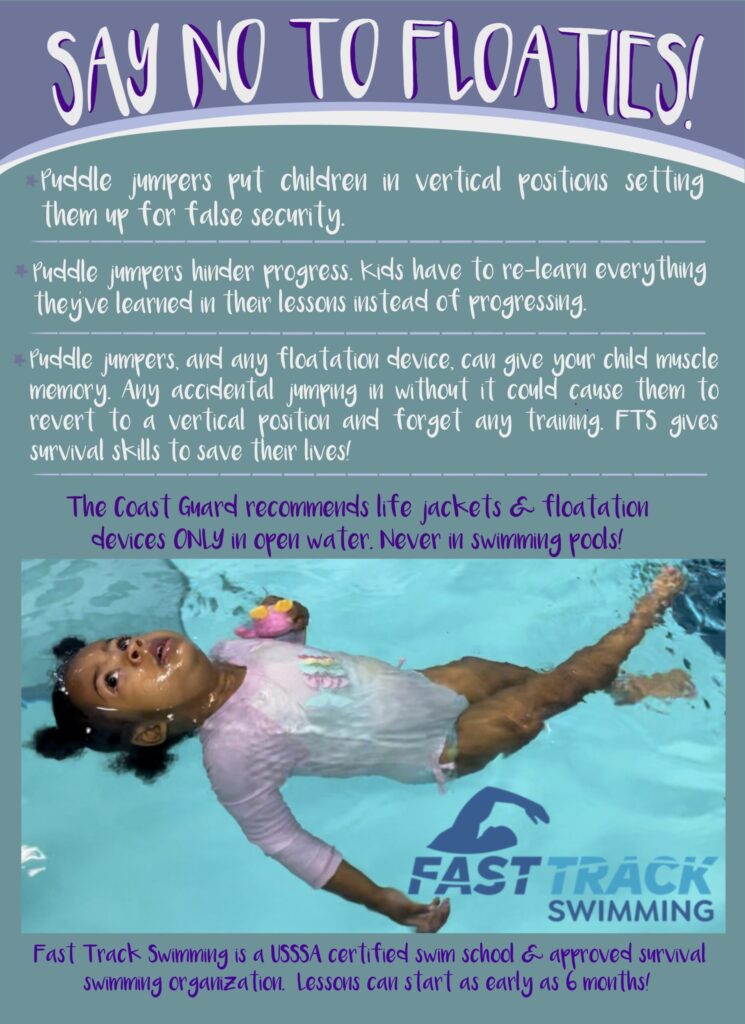
Getting swim lessons from a place that knows how to properly teach water safety is the best thing you can give your child. You are providing security, peace of mind and life saving measures for your child if the unthinkable happens. You’d never put them in a car with a seatbelt and no carseat. The seatbelt doesn’t help protect their bodies like a carseat does and gives you no safety measures. Puddle jumpers give the same effect. They are half secure, but aren’t the right protection for your child. If you have ever read a story of a child who has drowned, almost every single one of them have the same story. We didn’t get them lessons. We put them in a puddle jumper and they got confident. When the jumper was off they snuck into the water and sank because that’s what they knew.
Please note, in open water, coast guard approved life jackets are always a good idea and not the same thing.
WHERE DO I START?
What class is right for your child? Start here with the: HOW OLD IS YOUR CHILD QUESTION.
Then fill out the customer inquiry form, email us at info@fasttrackswimming.com OR call 281.547.7604. Please include any information you need us to know.
WHY CAN’T MY NON-SWIMMING CHILD BE IN A GROUP CLASS?
Have you ever been to a pool with your children and it’s pure chaos? We hear over and over again, I have 3 children who I can’t watch so I put them in a puddle jumper for my sanity. Kids are meant to be wild and crazy. That’s what they are. Which is why we do NOT put kids in a dangerous situation of non swimming, jumping around in a group of kids with one instructor paired to watch them while trying to teach them to be safe. We do 15 minute 1:1 classes for all children under the age of 4 to begin no matter what.
MY CHILD IS 2-3 BUT CAN SAVE THEMSELVES, WHAT DO I DO NEXT?
If your child is rolling and floating on their own, but doesn’t have the motor skills for strokes, it means we are in maintenance mode. Your teacher will begin to introduce these new skills and let their bodies catch up. It’s not a waste and it’s keeping up with what they have already learned. They have a lot more to go and it might look like slow progress but they are progressing. It’s only because of how fast they were able to roll and float. We are also letting them explore the water, “falling” into the water in a controlled environment, and making sure they really know what they are doing. Skills will come and keeping up with them will only help them progress when they are ready for more motor skills. Once they are rolling over from their back and kicking to the side our teachers may recommend them to move to the big pool to get acclimated before jumping into a 30 minute class with a partner.
WHAT DO I DO ON THE FIRST DAY AND WHAT DO I NEED?
On the first day come 15 minutes early to check in. There is a check in kiosk you can put the phone number in at the desk, check your student in, QR codes are available on the app to send to grandparents or pull up for ease to scan. If you are not able to check in, see front desk as policies may need signed. bills need paid, etc. POLICIES AND BILLS must be paid before the first lesson or the swimmer will not be allowed to swim. Bring a swimsuit, goggles and towel is the first step. Swim diaper and swim cover or (swim suit over diaper) for non potty trained kids.
WHY CAN’T I HAVE THE SAME SCHEDULE THE WHOLE YEAR?
Our year is broken up into sessions. To have consistencies with our teachers schedules we ask them to commit to these sessions. At the end of the session the teachers may need to change their schedules due to their family obligations, just as you have to change your schedule for yours. We drop all lessons at the end of sessions and redo the entire schedules.
Each session is the following:
SPRING: January to Mid-May. We always take a 2 week break for end of school activities, graduations, etc.
SUMMER: June to beginning of August. We always take a 2 week break for back to school activities, etc.
FALL/WINTER: End of August to Mid December. No lessons the week of Thanksgiving and end before Christmas break.
WHEN DOES MY CHILD START TO LEARN STROKES?
Typically, 2 and under lack the coordination skills to learn “strokes”. We implement kicking from day one. Contrary to what you see, gliding under the water is more important than a child moving their arms in any swim like structure. Kicking and gliding will get them farther and need this long before adding in any type of “freestyle” arm movement.
3 to 4 year olds little bodies are catching up to them and they are learning a lot of new motor skills all at once. Some kids learn at different paces, some have been in lessons consistently for 3 years. Lots of factors to take in before the answer can be given. Once the child can glide with kicks, roll to float using their side and not picking up their head, things start to fall into natural progression when given the right instruction.
5 and up stroke progression depends a lot on the learning style of your child. Taking direction of rolling to side, able to get arms out of water, keeping arms controlled, etc. They typically start learning strokes once breath control, gliding and rolling is mastered.
WHY LONGER LANE USE IS NOT ALWAYS THE BEST SOLUTION FOR MY CHILD
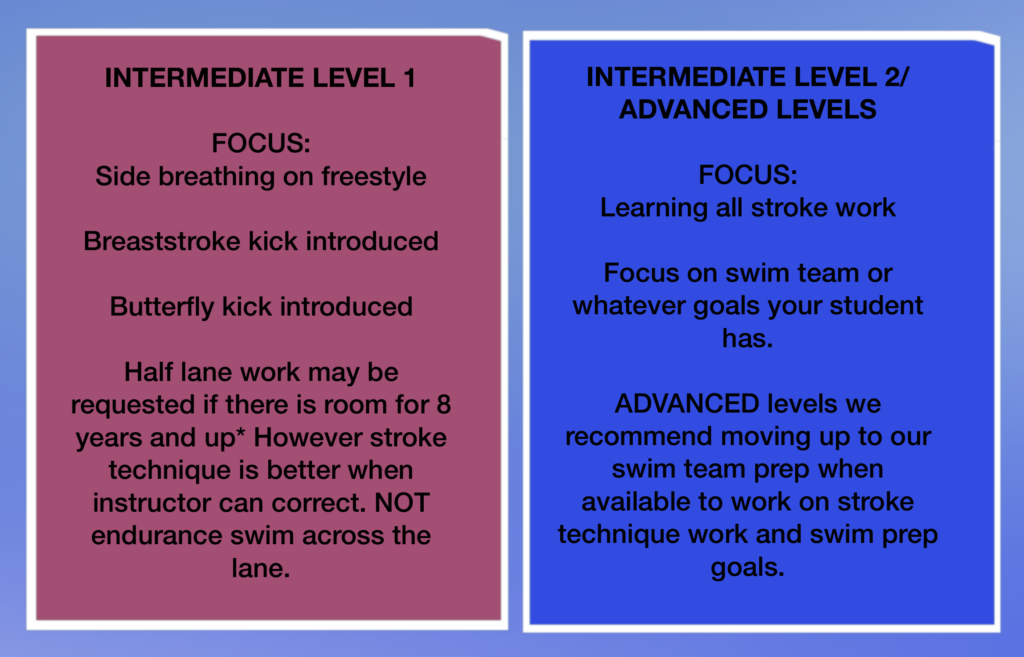
If you look at our larger pool you’ll see 8 stations and 2 lanes. Each station has a their own space and is 17 feet, they get plenty of space for a typical child under 10 years. Swimming lessons are there to learn and instruct your student how to properly swim. If they were in the lane they’d swim farther away from the instructor and practice endurance swimming, which is what our group advancement classes help with. Our smaller pool AKA turtle pool is the same length of 15 feet. If there is ever a need we can also teach older children there as well.
If you go to a place because they swim farther when they need hands on learning, are they retaining or just wasting time as the instructor sends them up and down the lane?
WHAT ARE STROKE ADVANCEMENT GROUP CLASSES?
Stroke advancement classes are for kids who are 7/8 years and older. We group them according to their level and use the lane. They work on endurance, technique building for students who want to take their swimming to swim team or competitive swimming.
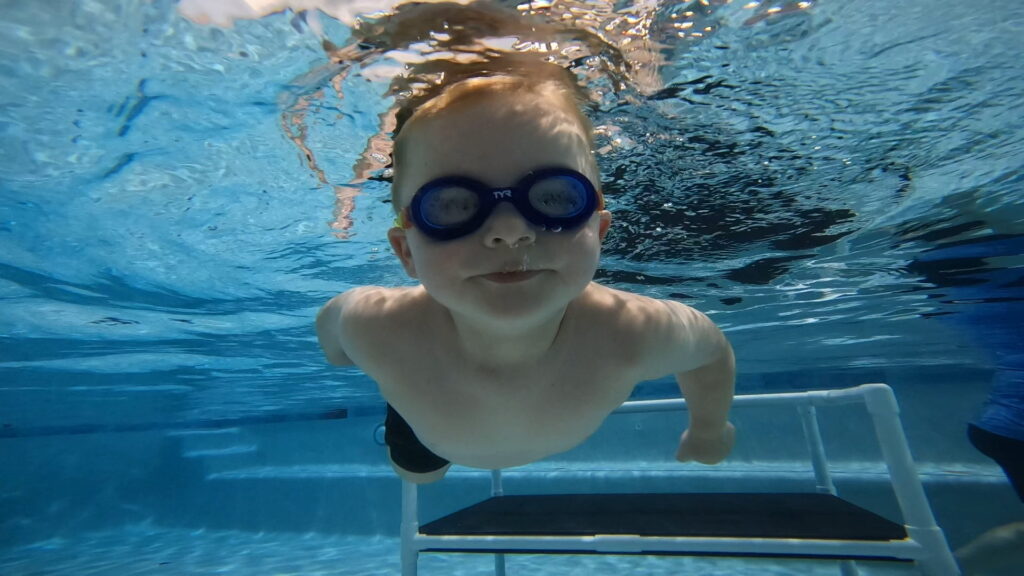
WHAT DO THE SEA CREATURES MEAN
0-2 YEARS


3 AND UP


MAKEUP POLICIES
Any lessons that notify the office at least 24 hours before the lesson is subject to ONE free makeup per month. If notified AFTER there will be a 10 dollar make-up fee. We know kids get sick and certain circumstances will be taken into consideration.
REFUND POLICIES
Notice of drops must be given the month prior to lessons being dropped. Cards are charged the first day of the month if you are on monthly billing and refunds will not be given if notice is not given 10 days BEFORE the due date. If a new session is beginning the cards are charged the Monday of the session. Refunds are not given after the due date. Credit card fees will apply if there are any refunds.
WHAT IS A PACKAGE VS MONTHLY?
We have 2 ways to pay.
MONTHLY: The first way is to pay once a month. The first of the month for the entire month. You will pay for the amount of lessons that you have during the month, for example some months have 5 Tuesdays- you’d pay a little more because you have 5 lessons. If you had 3 Tuesdays, you’d pay less and for 3 lessons only. Any type of lesson can be on monthly. Water safety, starfish, mini, semi, private, group, doesn’t matter.
PACKAGES: Packages are paid all up front for the amount of lessons offered 5 years and up are only offered seasonal/session packages and these are only offered at the beginning of our sessions. See, why can’t I have the same schedule FAQ. We do not prorate packages after a session has started more than 1 week. So if you are starting 2 weeks into the session packages are not an option.
Water Safety and Starfish packages are for 4 and under. We offer these at the beginning of sessions with longer options as well as 6 weeks at a time. Prices per lessons don’t change but you do have to buy at least 6 weeks. We do automatically enroll students through the entire session and drops are only if you send in WRITING or at the end of a session. However, we do try to email you to let you know when the package is ending. If the session doesn’t have 6 weeks left and you are already on the package, the remaining weeks are charged at the price per lesson of the package*. Any new student starting at the end of a session with less than 4 weeks left has to pay monthly until a new session begins.